Case study · AI × Web3 product · 14 weeks

People wanted an AI that speaks in their voice. All 5 we surveyed had a concern about it.

Agent Studio lets anyone create an AI agent with its own look, personality and cloned voice, then publish it for others to chat with. I designed how creators get in and build their agent, for people who have never touched a crypto wallet.

Start without a wallet
Voice is the magic moment
4 guided creation steps
My role
UI/UX designer, creator side
I designed
OnboardingPersonality builderVoice setup
Team
2 product designers
Timeline · Platform
14 weeksResponsive web app

TL;DR

Problem
People loved the idea of their own AI agent, but Web3 terms and too many setup steps made creating one overwhelming.
My role
UI/UX designer for the creator side: onboarding, personality builder and voice setup. One of 2 product designers, 14 weeks.
Key decision
No wallet at sign-up, then 4 guided steps with the agent’s portrait always on screen, so you are building someone, not filling in a form.
Evidence
Measureda survey of 5 people. Conceptan expert walkthrough of the shipped screens, not a usability test.
5 / 5survey respondents named a concern about voice cloningMeasured
1 / 5respondents said they had used a crypto wallet beforeMeasured
4guided creation steps: image, personality, voice, economyConcept
8user stories mapped across beginners, creators and developersConcept

01 · Overview

Two designers, one marketplace, split down the middle.

The product

Creators build an AI agent with an image, a personality, a cloned voice and a token economy. Users discover agents, chat with them and pay. Each side only works if the other does.

The problem

Early users loved the idea of their own AI agent, but told us that technical wording, Web3 terms and too many setup steps made creating one overwhelming.

My part

I owned the creator's way in: onboarding, the personality builder and voice setup. Research and design foundations were shared with the other designer.

My focus: creator side

Onboarding and sign up, the Personality builder, voice setup and the step-by-step creation flow.

Another designer: user side

Discovering agents, chatting, creator profiles and activity. We designed the handoff points together.

02 · Problem

Excited to start. Overwhelmed by step two.

Agent Studio is a two-sided marketplace. Our working hypothesis was that it broke at the start of the loop. When creators gave up, the marketplace stayed thin, users had less to chat with, and creators earned less. Fixing creation was the first lever.

Creators start building setup felt overwhelming Few agents published marketplace feels empty Users chat less less to discover Creators earn little less reason to create where I stepped in

Onboarding was overwhelming

  • Too many technical steps
  • Web3 wording scared new users

Voice setup felt complicated

  • The personality builder was unclear
  • The dashboard showed too much at once

Money was a mystery

  • Monetisation wasn't explained
  • No emotional connection with the product

03 · Research

We asked the people who wanted it most.

We talked to early adopters, beginners and creators who wanted to build AI agents. They became our “OG clients”: an early community in the product's Discord where I shared designs and collected feedback on every iteration. We wanted to understand their motivations, and their fears about cloning a voice, sharing an identity and making money.

DiscordOG community feedback on every design iteration, plus interviews
Survey5 respondents, multiple choice and open answers
Stories8 user stories, from curious beginners to crypto enthusiasts
Mappingbehaviour mapping and a unified user journey

What the survey told us

5 respondents · counts, not percentages

Who answered

2 creators1 developer1 tech fan1 student

Have you used crypto wallets or tokens before?

1 yes2 no2 not sure

If not, would you still want to earn, even without crypto knowledge?

2 yes2 maybe1 no

What concerns do you have about voice cloning?

2 privacy, misuse2 ownership1 accuracy
“None” was an option. Nobody chose it.

“Maybe, but I don't want anyone to misuse my voice. Control and consent are everything.”

Survey respondent

“Yes, but only if I know I can delete it anytime and keep it private if I want.”

Survey respondent

“I'd trust [Agent Studio] if it clearly explained how my voice data is used, without forcing me into crypto or technical setups.”

Survey respondent, shortened

“It's like creating a smarter, digital version of myself that can keep working while I rest.”

Survey respondent
  1. As a curious user, I want to explore the Agent Studio platform so that I can understand the potential of creating my own personalized AI agent.

  2. As a new user, I want to record or upload my voice sample so that I can initiate the voice cloning process for my AI agent.

  3. As a creator, I want to customize my agent's personality traits and voice modulation so that I can build a sense of trust and ownership with my AI.

  4. As an engaged user, I want to interact with my AI agent so that I can refine its responses and behavior to better suit my needs.

  5. As a developer, I want to provide feedback to my AI agent so that I can improve its intelligence and autonomy over time.

  6. As a satisfied user, I want to explore monetization options for my AI agent so that I can potentially earn from my creation.

  7. As a crypto enthusiast, I want to set up cryptocurrency transactions for my AI agent so that I can integrate blockchain features into my monetization strategy.

  8. As a traditional user, I want to set up conventional payment methods for my AI agent so that I can monetize through familiar financial systems.

We translated survey responses and community feedback into eight user stories to guide the creation flow. These are team written summaries of user needs, rather than direct participant quotes. Two of them pulled in opposite directions: a crypto enthusiast wanted blockchain payments, a traditional user wanted familiar ones.

04 · Insights

Five things we heard, five rules we designed by.

What we heardWhat it meansDesign rule
People want a guided flowBlank forms and long settings pages stop beginnersGuide, don't configure. One clear step at a time, with visible progress
Voice is the magic momentHearing the agent speak is when people commitMake the agent feel real early. Keep its face on screen while you give it a voice
Web3 is confusingWallets and tokens stop people from continuingStart without the chain. Email or Google sign-up, explain tokens with familiar ideas
They need help with moneyCreators can't price or promote without guidanceTeach at the moment of need. Explain economy terms inside the step that uses them
All 5 respondents named a voice concernConsent and control decide whether people trust Agent Studio at allMake control visible. The open problem I take on in Redesign 2026

05 · Design

From “create agent” to an agent that talks back.

Sign up
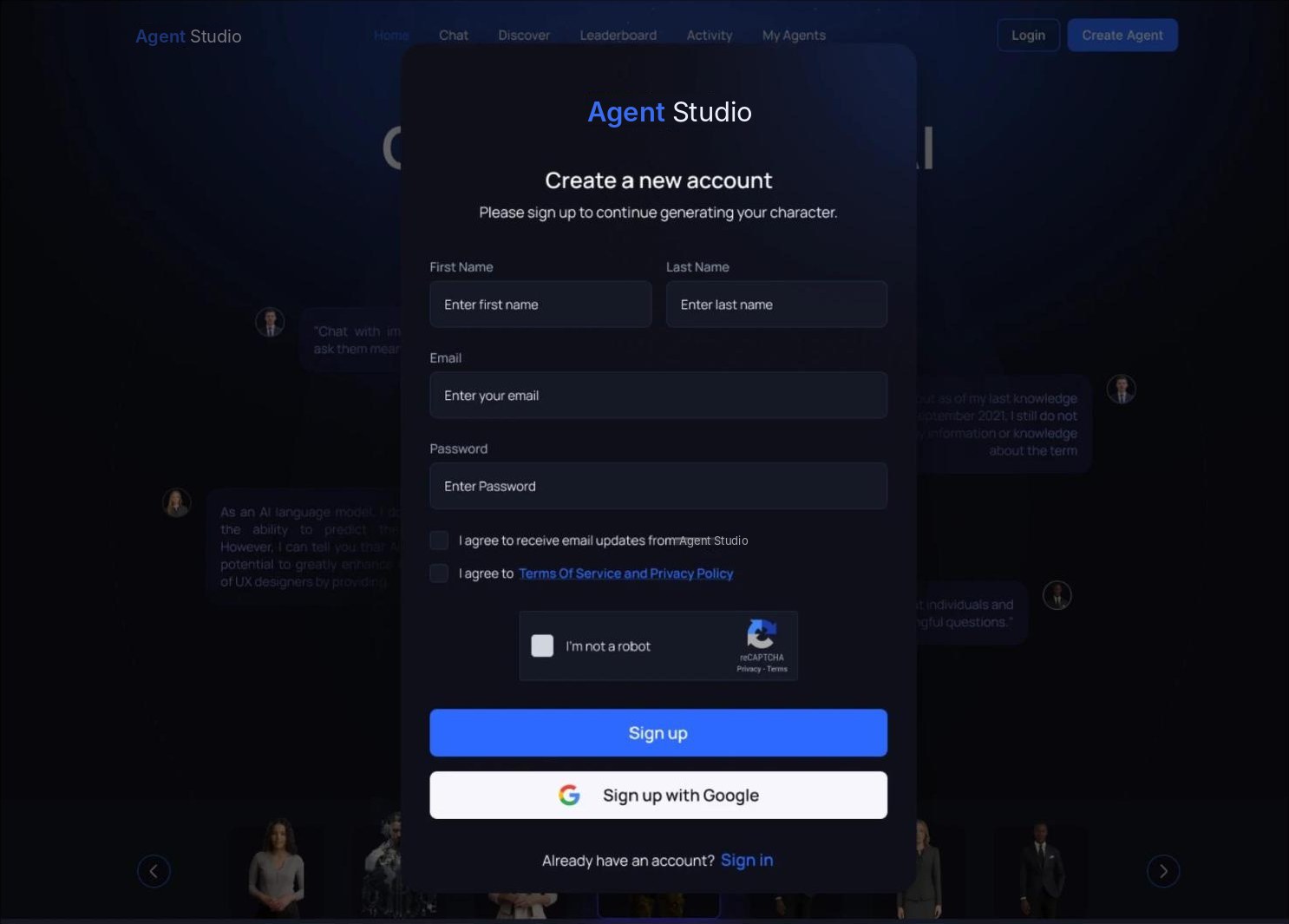
Agent Studio sign up modal with name, email and password fields, Sign up and Sign up with Google buttons, and no wallet step.

Onboarding: start with an email, not a wallet.

Sign-up asks for a name, email and password, or one click with Google. No wallet, no token terms. The copy frames it as continuing what you started: “sign up to continue generating your character.”

BecauseOnly 1 of 5 survey respondents said they had used a crypto wallet. Asking for one at the door risks losing people before they see what Agent Studio does.
Agent creation
Agent Studio agent creation with a four step progress bar: Generate Image, Generate Personality, Generate Voice, Generate Economy.

Creation as four named steps.

Image, Personality, Voice, Economy. A stepper at the top shows what's done and what's next, and the agent's portrait stays on screen the whole way, so you are building someone, not filling in a form.

BecausePeople asked for a simple, step-by-step journey. Seeing the agent take shape keeps motivation up through the longer steps.
Generate voice
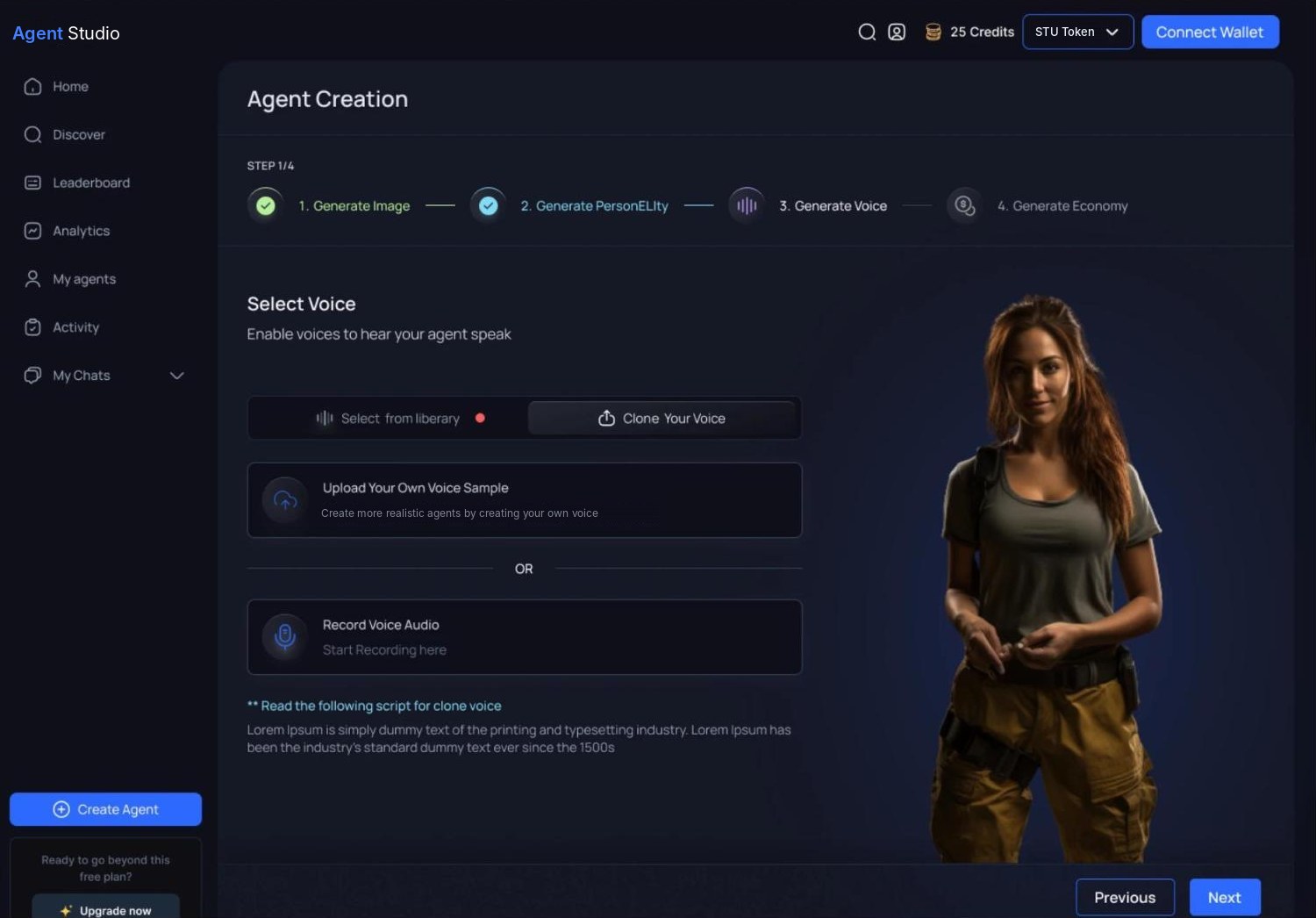
Agent Studio voice step: choose a voice from the library or clone your own by uploading a sample or recording audio with a guided script.

Voice: two paths, one goal.

Pick a ready voice from the library, or clone your own by uploading a sample or recording in the browser with a script to read. Beginners get a voice in one click. Creators who want it to sound like them have a clear path.

BecauseVoice is the moment people fall for their agent. It had to be fast for everyone, and personal for those who wanted it.

06 · Where the two sides meet

What a creator builds is what a user meets.

HandoffCreator side (mine)User side (other designer)
IdentityImage and name chosen in creationPortrait and name on every agent card
VoiceLibrary or cloned voice set in step 3The voice users hear in chat
PersonalityCharacter defined in PersonalityChat that stays in character
EconomyToken set up in step 4Market cap and liquidity on the card
Discover agents
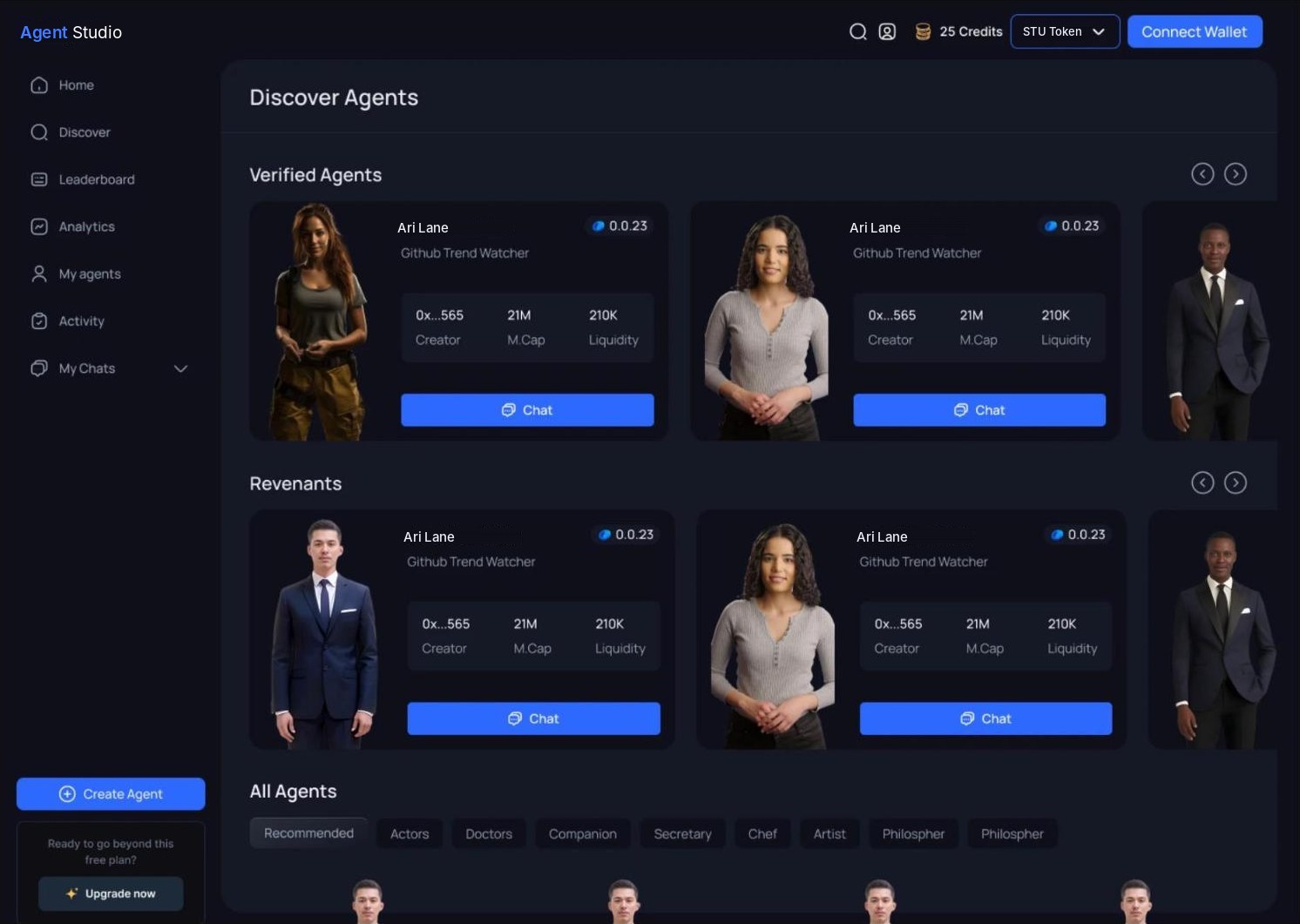
Agent Studio Discover Agents page with verified agent cards showing portrait, role, creator, market cap, liquidity and a Chat button.
Discover, designed by the other designer on the team. Every field on these cards comes from a choice the creator made in my flow.

07 · Chapter 1

Giving agents a voice: Recite and Broadcast.

Voice is what turns an agent from a chatbot into a character. I designed the full flow for teaching an agent a voice and using it to create shareable video.

Two modes, one panel

Recite: creators upload an audio file or record a voice sample directly in the browser. A live waveform confirms the recording is working, and playback lets them check it before using it.

Broadcast: creators write a script, choose the agent's voice and a background image, and generate a video of the agent speaking.

Both live in one panel with a simple toggle, so switching from training a voice to using it never means leaving the agent.

One panel, two modes: train the voice, then put it to work.

Designing the cost into the flow

Generating voice and video costs credits, so I built the rules into the interface instead of letting a generation fail:

Under 100 creditsA Buy Credits modal opens before anything else
100 to 149 creditsRecite works, Broadcast shows an insufficient credits state with a direct route to top up
150 credits and aboveEverything works normally
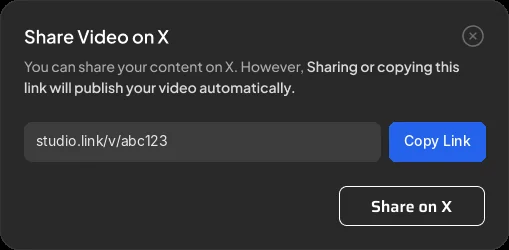
Share Video on X modal: sharing or copying this link will publish your video automatically, with the link studio.link/v/abc123, Copy Link and Share on X

Users learn the cost before they act, not after a failed generation.

Edge cases

  • Video still generating: a progress state on the panel so users know work is happening
  • Closing the modal mid generation: the flow handles it without losing the user's script or settings
  • Generated video on the profile: finished videos appear in the agent's profile videos tab

Privacy by design

Sharing a video to X makes it public. The share modal says so plainly: sharing or copying the link publishes the video automatically. Nothing goes public by accident.

Microcopy iteration

Mobile wallet browsers could not download videos. The first message was a dead end. I iterated the copy until it gave users a working path instead.

You cannot download videos on mobile as it is not supported. Please use desktop to download video.
Video downloads are not supported in the wallet app. Please tap the ⧉ in the top right corner of the video to copy its URL, you can paste the URL in another browser to preview or download the respective video.
Video downloads aren't supported in the wallet app. Tap the ⧉ in the top right of the video to copy its URL, then open it in a browser to preview or download.

From "you can't" to "here's how", draft by draft.

08 · Chapter 2

Training and the credits loop.

Agents need credits to train and create. I designed how credits flow in through staking, how they are spent on training, and how creators see where every credit went.

The loop: stake a pod → pod distributes credits → credits pay for training (voice, selfie model) and media → the ledger records every movement.

Pod staking

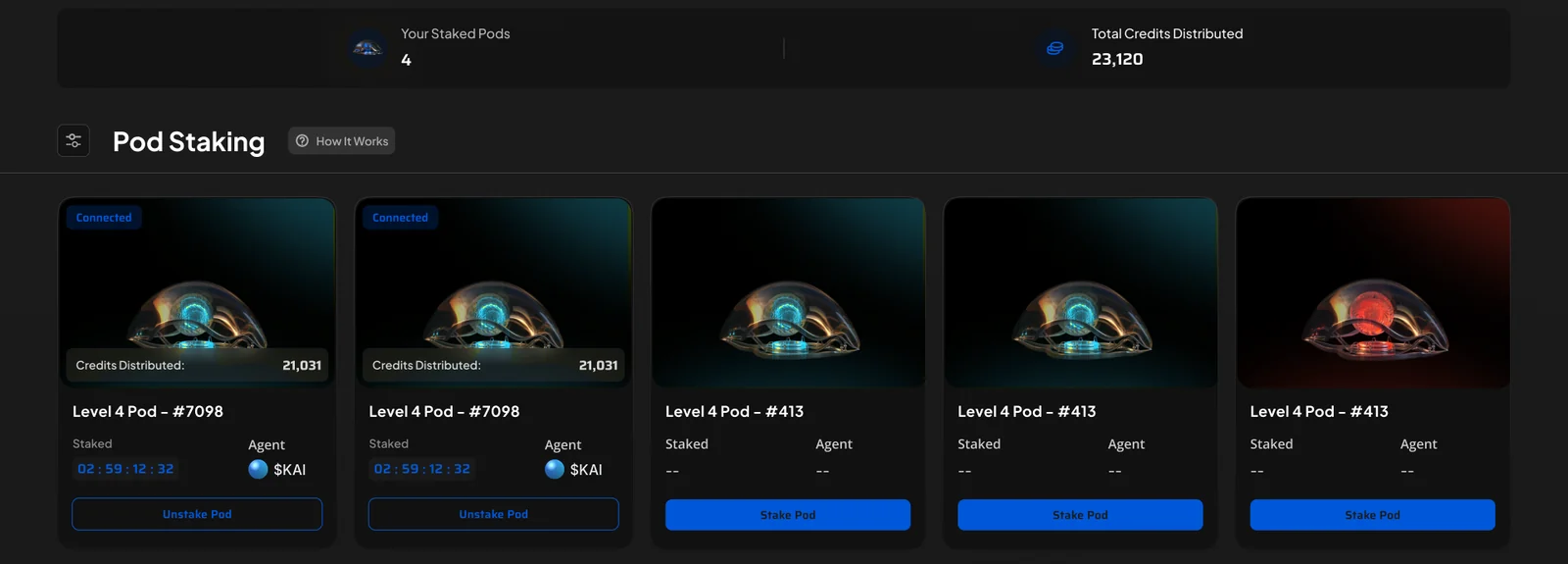
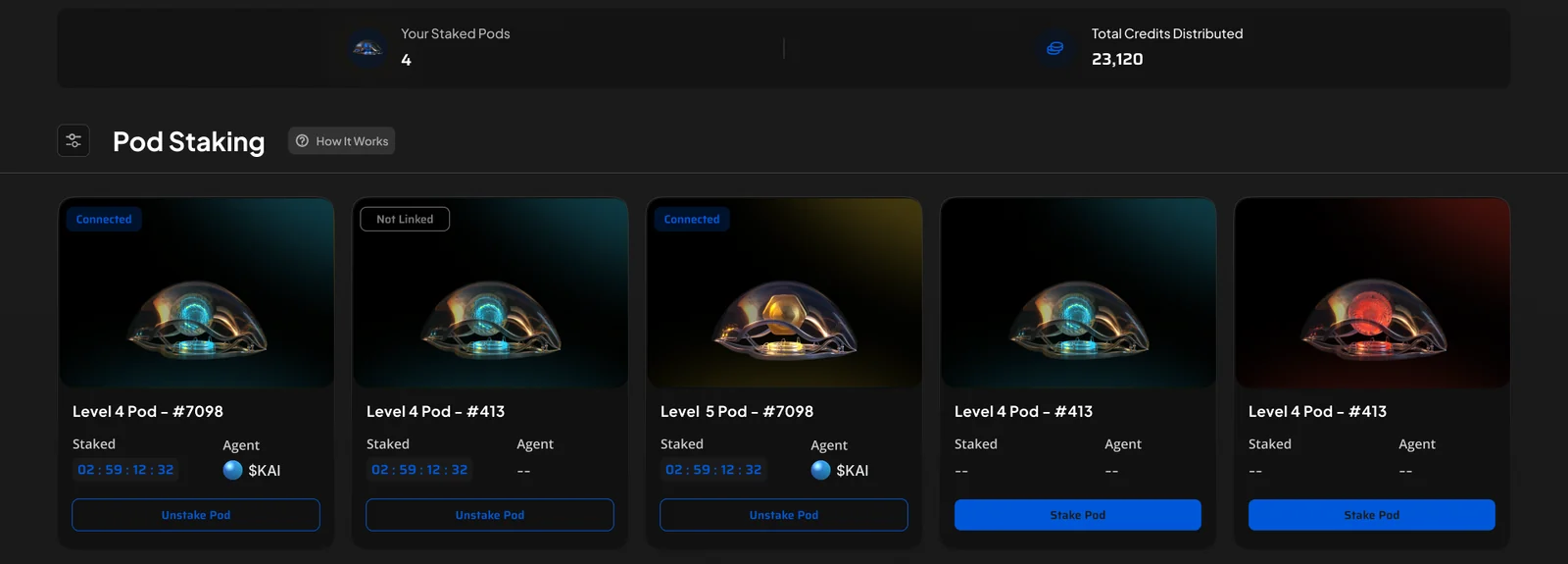
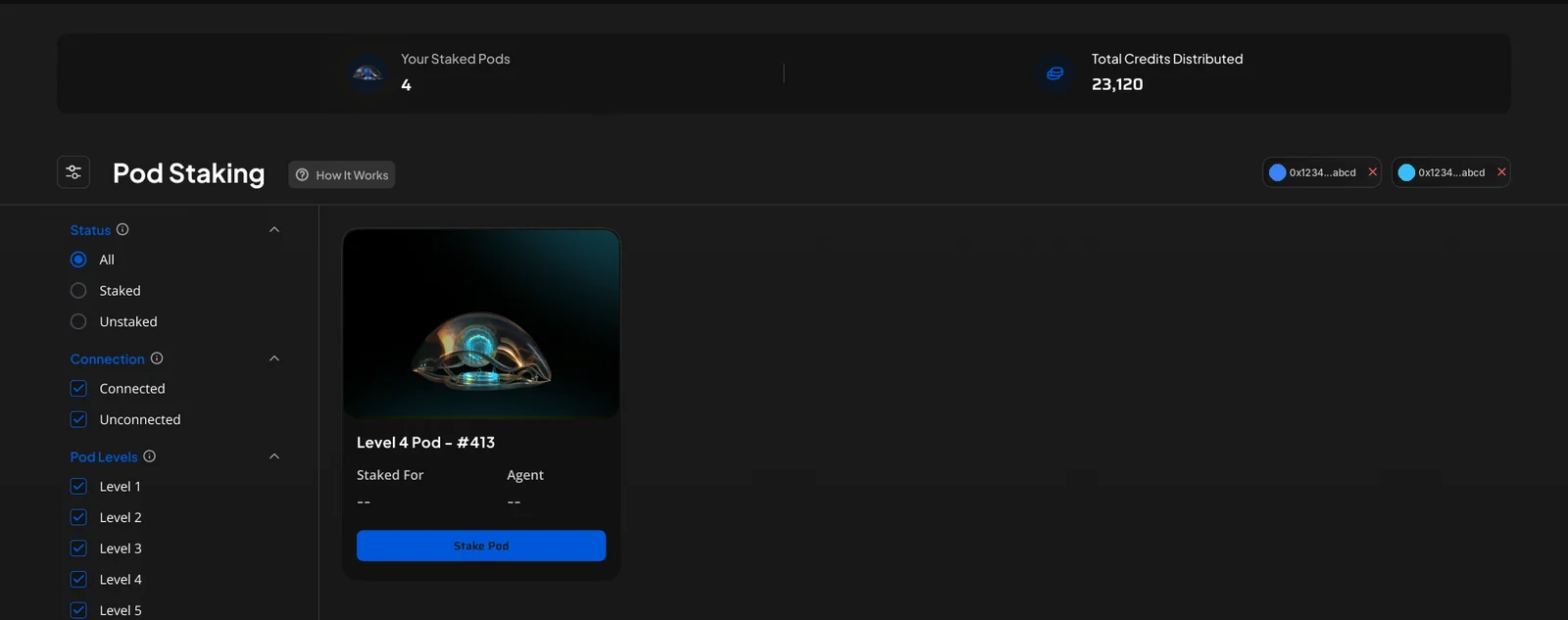
Each pod is a collectible that can be staked and linked to an agent. I designed the card to show its full life in one component:

  • Unstaked: level, ID and a primary Stake Pod action
  • Staked, not linked: a "Not linked" tag and a live staked timer, so users see it is working but not yet assigned
  • Connected: a "Connected" tag, the linked agent, the timer and Unstake
  • Connected with rewards: a credits distributed overlay on the pod image

Filters on the left (status, connection, pod level) let users with many pods find the right one fast. Summary KPIs sit at the top: staked pods and total credits distributed.

Pod staking: staked pods and total credits distributed at the top, then five pod cards: two connected with a staked timer, the agent $KAI and a credits distributed overlay, and three unstaked with a Stake Pod button
Pod cards in four states: connected, not linked with a staked timer, connected to $KAI, and unstaked

Four states, one card. Users always know what a pod is doing.

Wallets

Pods and tokens live on two chains, so users can connect two wallets. Each wallet shows as a removable chip, with a clear Disconnect state.

Pod staking with filters for status, connection and pod level on the left, and two connected wallet chips with remove buttons at the top right

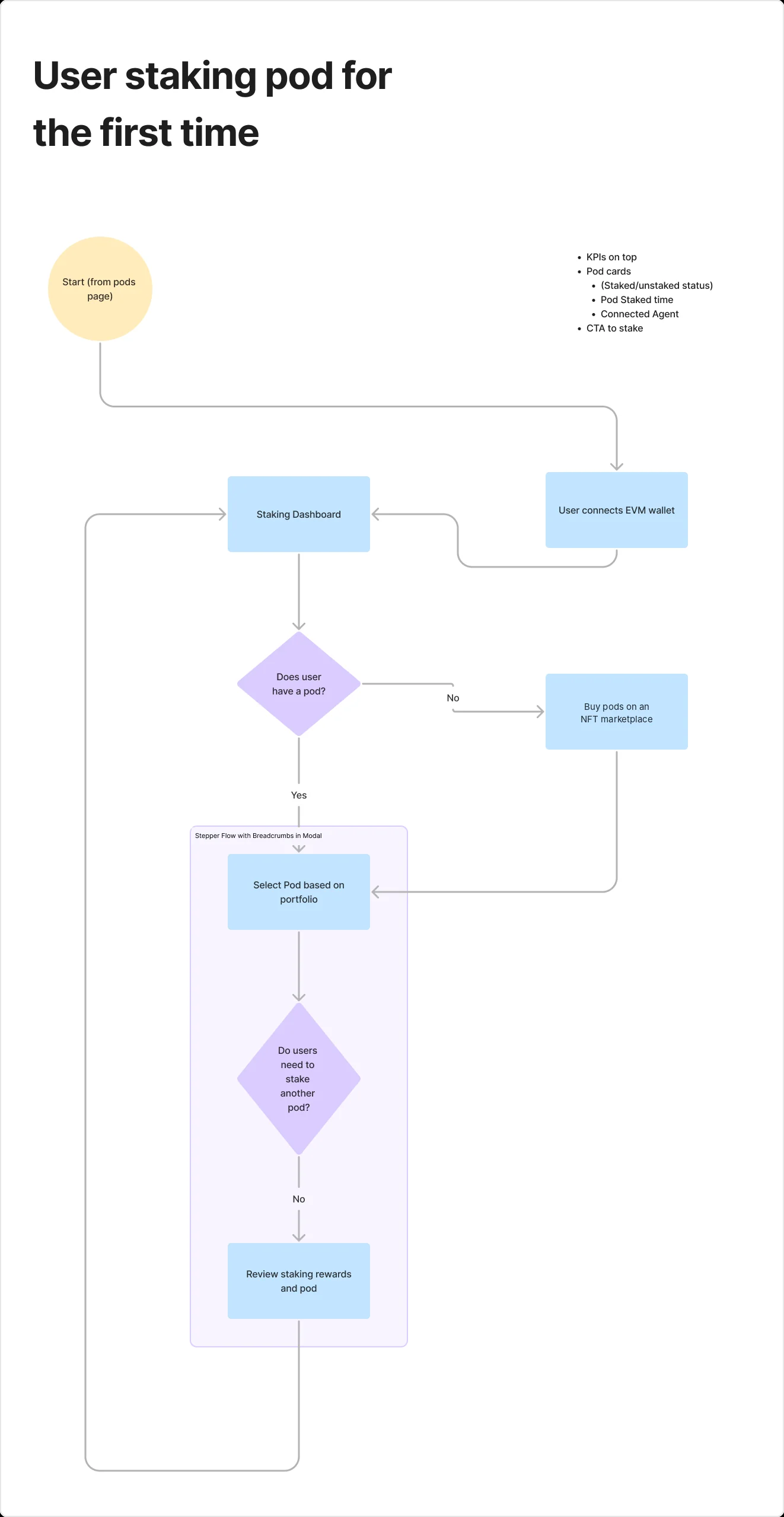
First time staking flow

I mapped the first stake before designing a single screen:

  1. Start from the pods page and connect a wallet
  2. Land on the staking dashboard
  3. Does the user own a pod? If not, route to a marketplace
  4. Select a pod, in a stepper with breadcrumbs
  5. Stake another pod, or move on
  6. Review staking rewards and the pod

Mapping the first stake before designing a single screen.

Flow diagram, user staking a pod for the first time: start from the pods page, connect wallet, staking dashboard, does the user have a pod; if not, buy pods on an NFT marketplace; select a pod, stake another, review staking rewards

Credits ledger

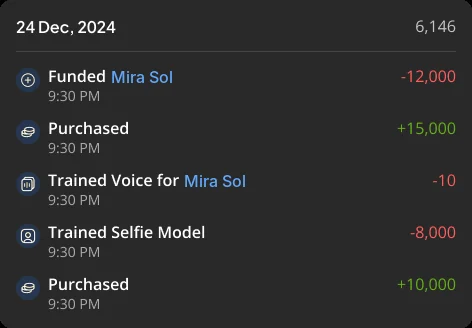
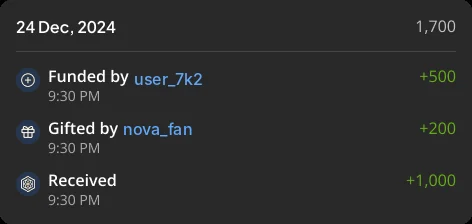
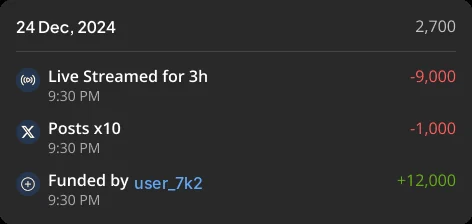
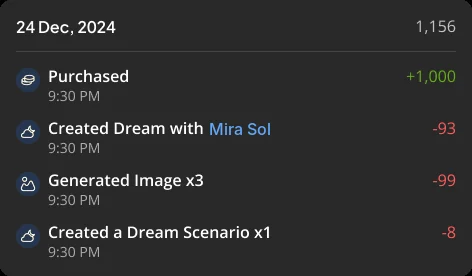
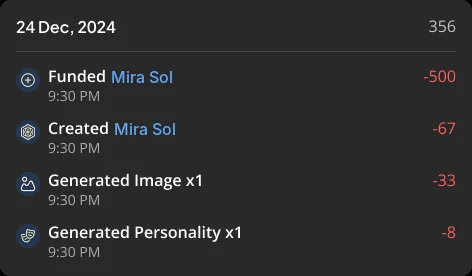
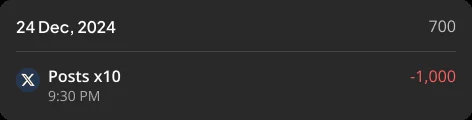
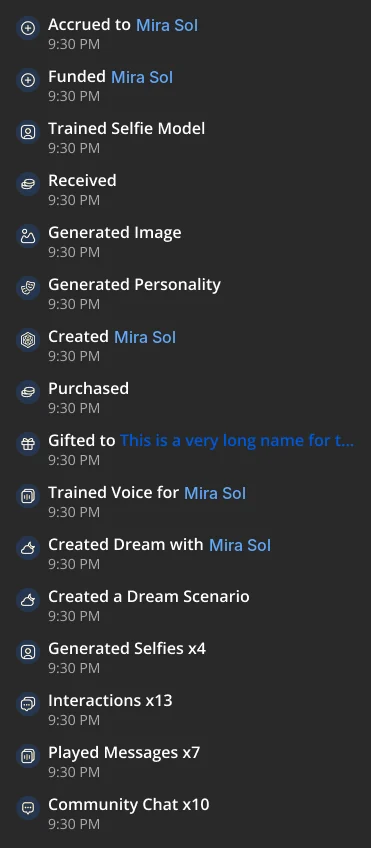
Every credit in and out, grouped by day. One row per action with its own icon, green for credits in, red for credits out, the day's figure at the top right of each card, and long names that truncate cleanly instead of breaking the row.

Ledger day card: funded Mira Sol, purchased, trained voice for Mira Sol, trained selfie model, purchasedLedger day card: funded by user_7k2, gifted by nova_fan, receivedLedger day card: live streamed for 3 hours, posts, funded by user_7k2
Ledger day card: purchased, created dream with Mira Sol, generated images, created a dream scenarioLedger day card: funded and created Mira Sol, generated image and personalityLedger day card: posts
Every ledger action type with its own icon, including a very long name that truncates cleanly

Sixteen action types, one consistent pattern.

Staking dashboard

Total value locked, total staked, rewards pool and allocated rewards across the top; personal unclaimed rewards, staked amount and pool share below; a focused stake panel on the right with a single primary action.

Figures in the mockup are illustrative.

09 · Chapter 3

Onboarding: teaching a new economy in ten steps.

First time users land on an agent profile full of unfamiliar terms. Instead of a manual, I designed a ten step guided tour that explains each concept right where it appears.

A spotlight dims the rest of the page and highlights one element at a time. Each step has a short title, two or three sentences, a progress bar ("1 of 10"), Previous, Next and a close button. The tooltip points at the element it explains: the agent itself, the energy and credits balance, the keys panel.

Explain the concept on the exact element that uses it.

10 · Chapter 4

The core experience (shared work).

Working as a two person design team, we also designed the core creator and fan experience. I contributed to these flows alongside my own areas.

Create an agent: a step by step builder for personality, appearance and capabilities

Discover: a marketplace of agents by category (actors, companions, history, NFTs) with trending agents up front

Chat: real time conversations where each agent stays in character and sets the scene

Agent profile: creator, holders, keys, interactions and earnings, with dreams, gallery and activity tabs

Dream customization: a structured form for building a scenario with an agent: title, description, scene, greeting, tags, the agent's instructions, and generated display, background and avatar images with Upload and Generate Again actions.

11 · Expert walkthrough

I walked the flow as a first-time creator, and scored what I found.

Task: create an agent with your own voice, with no crypto experience. I stepped through the shipped screens and rated each problem on Nielsen's severity scale, from 1 (cosmetic) to 4 (fix before release). This is an expert review of static screens, not a usability test. States the screens don't show, such as a failed voice upload or a pre-publish review, could not be judged; they belong in the test. It tells me where to point a real test, not how real users behave.

16issues found
1severity 4, fix before release
6severity 3, major
7severity 2, minor
2severity 1, cosmetic
ScreenWhat the creator meetsWhy it mattersHeuristicSev.
VoiceNo word on how the cloned voice is stored, used or deletedThe concern all 5 respondents raised goes unanswered at the exact moment they hand over their voiceHelp and documentation4
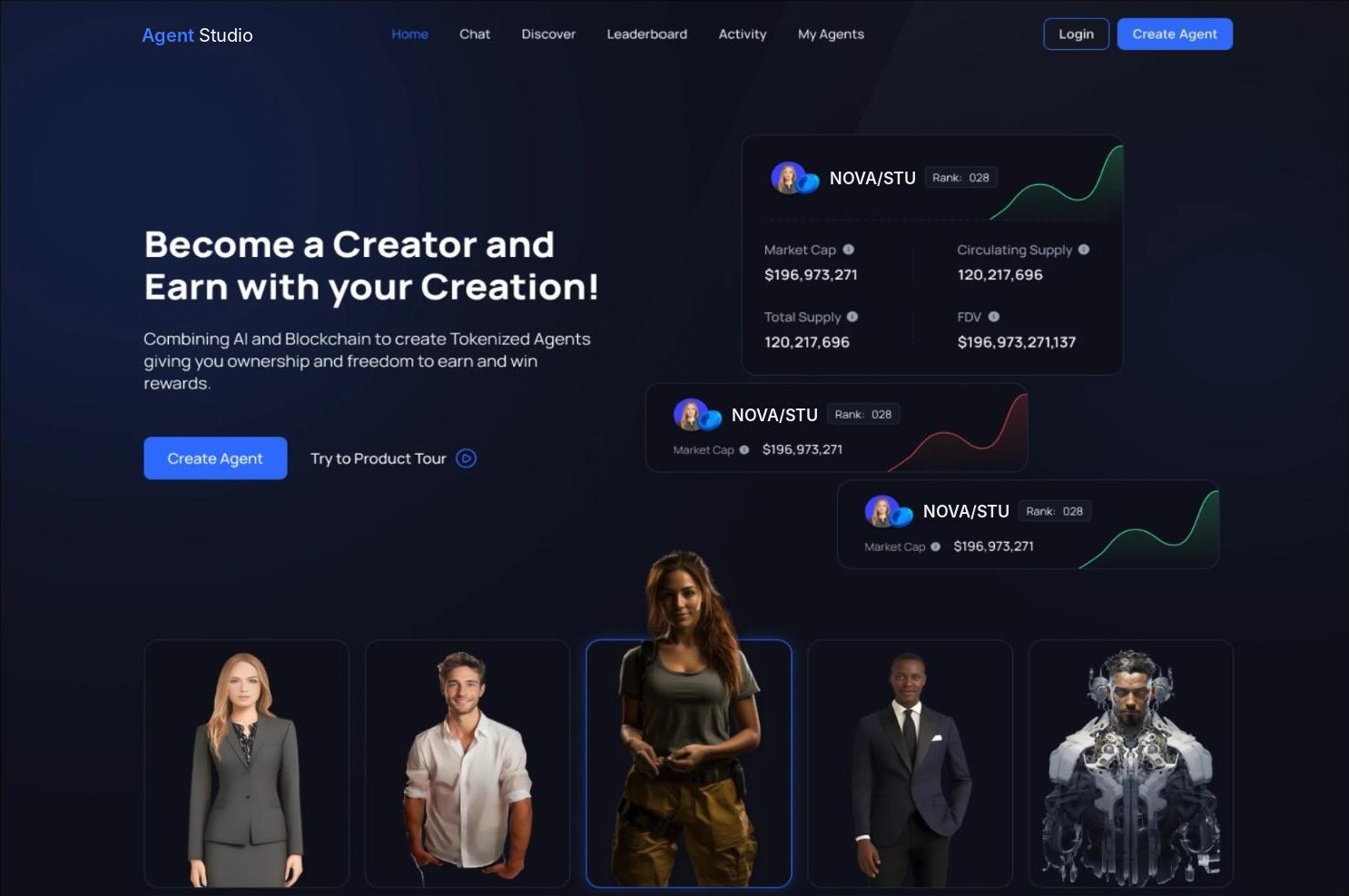
Landing“Combining AI and Blockchain to create Tokenized Agents”Leads with vocabulary that only 1 of 5 respondents said they had used in practiceMatch with the real world3
Every stepThe stepper always reads “Step 1/4”Creators can't trust where they are in a flow sold as guidedVisibility of system status3
VoiceThe script to read is placeholder textWould block the task if shipped: the creator doesn't know what to sayHelp and documentation3
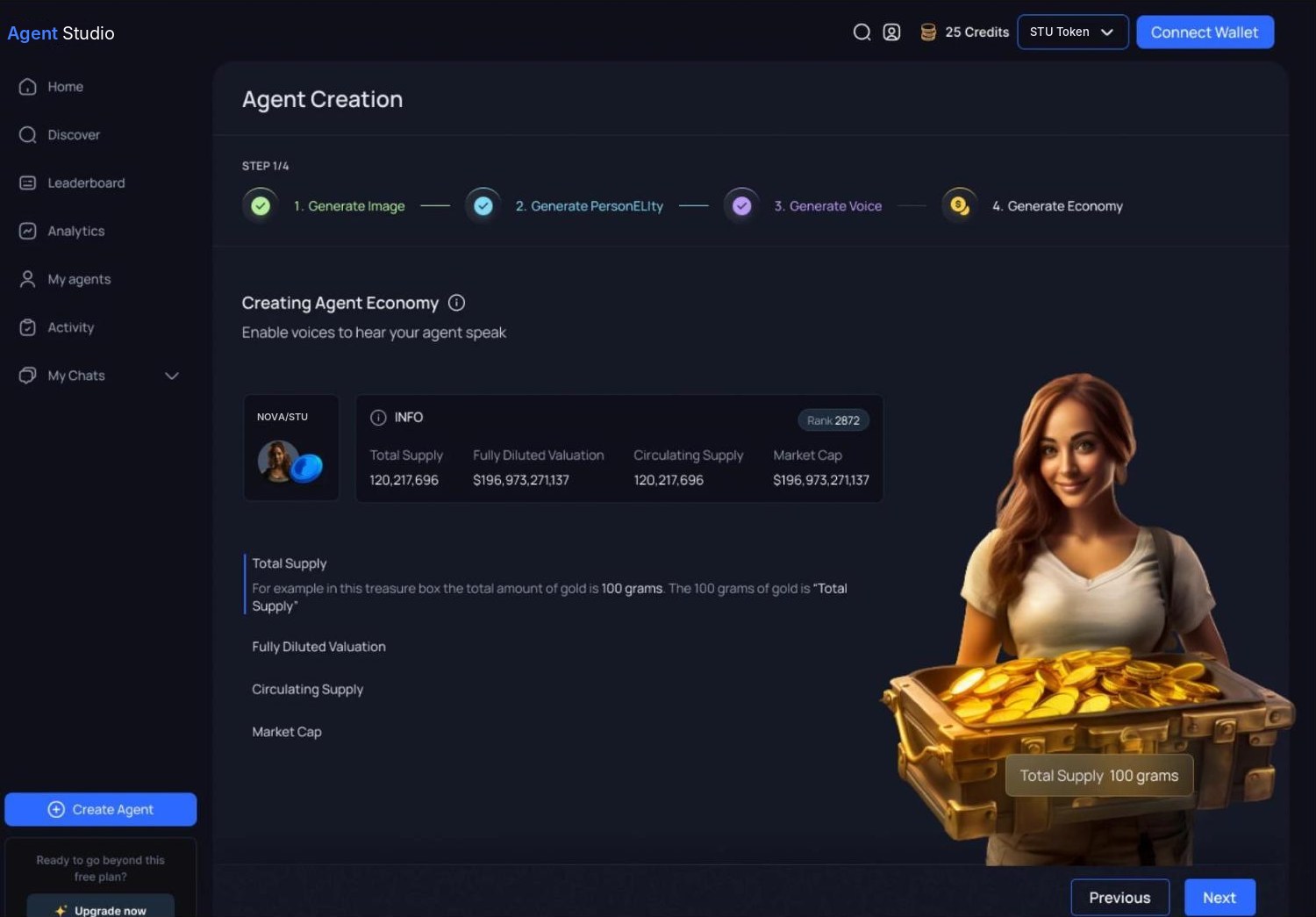
EconomyOnly token pricing is offeredA user story asks for familiar payment methods; the research to design story leaves it unansweredMatch with the real world3
PublishNo screen in this set reviews what becomes public: identity, voice permissions, audience, priceCreators need to see what goes live before it does. It may exist outside these screensError prevention3
Discover*Price shown as a token icon and “0.0.23”No currency, unit or cost per chat, so users can't judge what they'll payMatch with the real world3
Discover*“Verified Agents” with no definitionCould read as identity check, quality check or endorsementHelp and documentation2
Discover*Cards lead with market cap and liquidityUsers choose an agent by what it helps with; capability gets one short lineMatch with the real world2
LandingToken cards with market caps above the foldFrames Agent Studio as trading, before it shows creatingAesthetic and minimalist design2
Sign upSeven inputs: names, email, password, two checkboxes, reCAPTCHAHeavy before any reward. The Google option is the right shortcut and should leadFlexibility and efficiency2
Every stepConnect Wallet, STU Token and credits in the header, Upgrade now in the sidebarMoney and upsell compete with creation on every screenAesthetic and minimalist design2
EconomySubtitle reads “Enable voices to hear your agent speak”Copied from the voice step, so the step makes the wrong promiseConsistency and standards2
EconomyMarket cap, FDV and circulating supply lead the stepThe treasure chest metaphor (“100 grams of gold”) is a strong translation, but the jargon still comes firstMatch with the real world2
Landing“Try to Product Tour”Grammar slip on a primary linkConsistency and standards1
Voice“Select from liberary” in a key stepA typo in the voice step reads as one more mistakeConsistency and standards1

* Discover was designed by the other designer. I include it because the creator flow decides what those cards show.

What already works

One-click Google sign-up. Sign-up copy that frames it as continuing your character, not starting a chore. The agent's portrait stays on screen through every step. Two voice paths for beginners and creators. A treasure chest metaphor that makes token supply understandable.

12 · Redesign 2026 · concept

Trust in an AI that speaks as you.

The shipped version made creation possible. My walkthrough found one severity 4 issue, and it sits on the finding we under-served: all 5 survey respondents named a concern about their voice. These concepts are not shipped. Built in Agent Studio's own visual language and with its own agent portraits, they show where I would take Agent Studio next, in line with the EU AI Act's expectation that people know when they are talking to an AI.

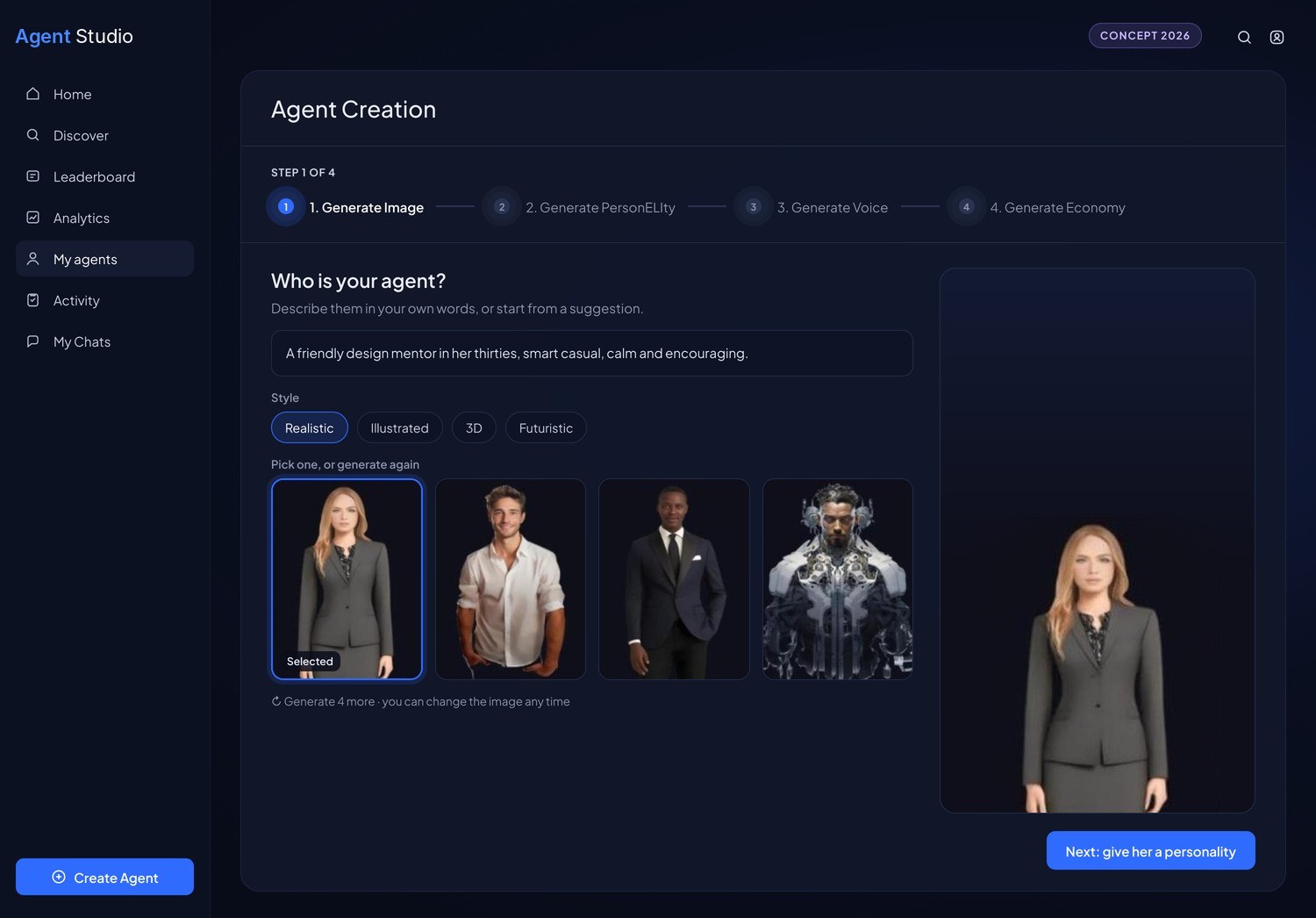
Concept 2026 · Step 1 of 4
Concept: step 1 of agent creation. The creator describes the agent in plain words, picks a style and chooses one of four generated portraits.
Who is your agent? Plain words instead of settings, four options to choose from, and a stepper that shows the real step. Fixes the static “Step 1/4” label. Concept, not shipped.
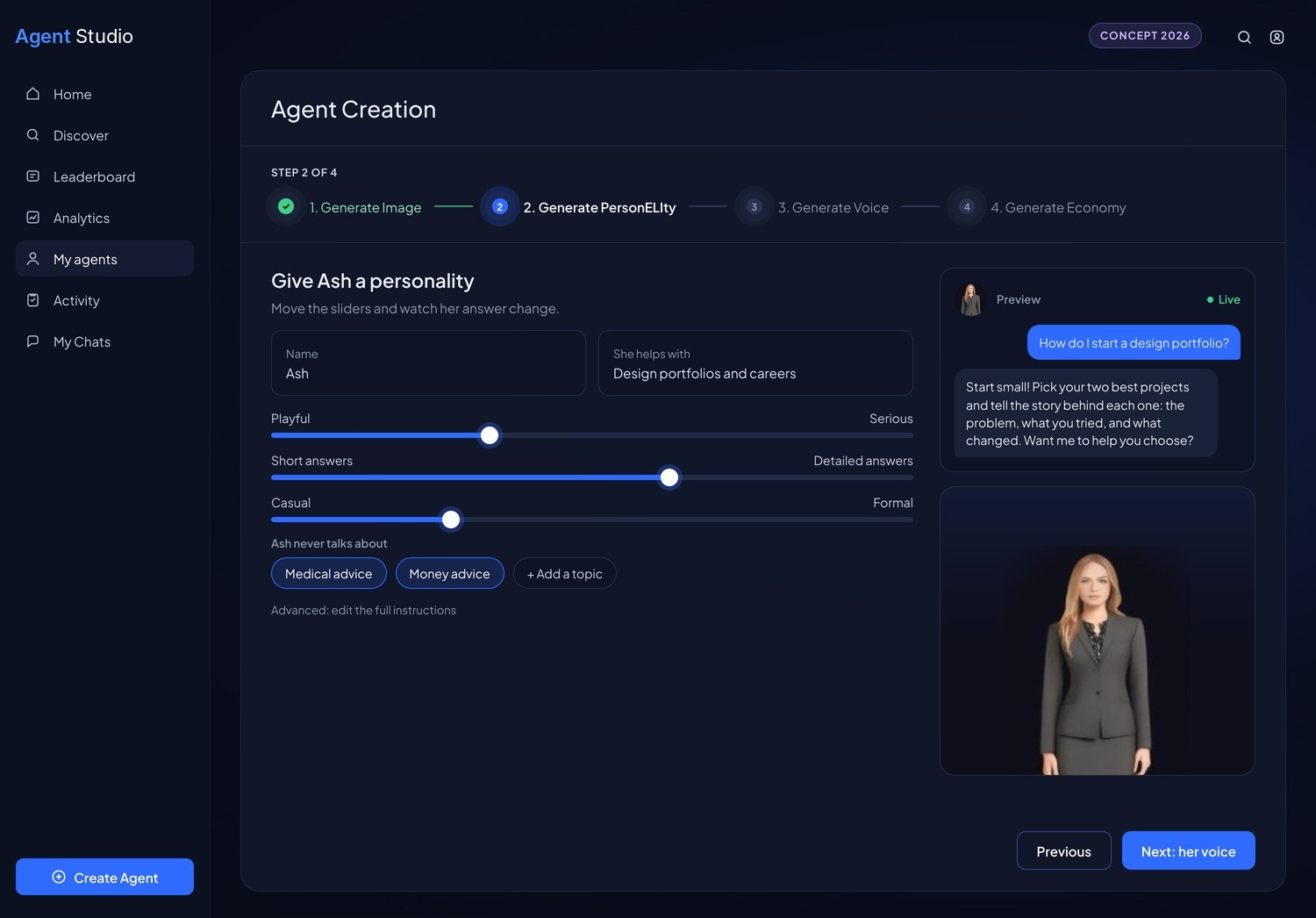
Concept 2026 · Step 2 of 4
Concept: Personality builder with three sliders, topics the agent never discusses, and a live chat preview of how the agent answers.
Personality with a live preview. Three sliders change how Ash answers in real time, and creators set topics she never discusses. People understand a character by hearing it talk. Concept, not shipped.
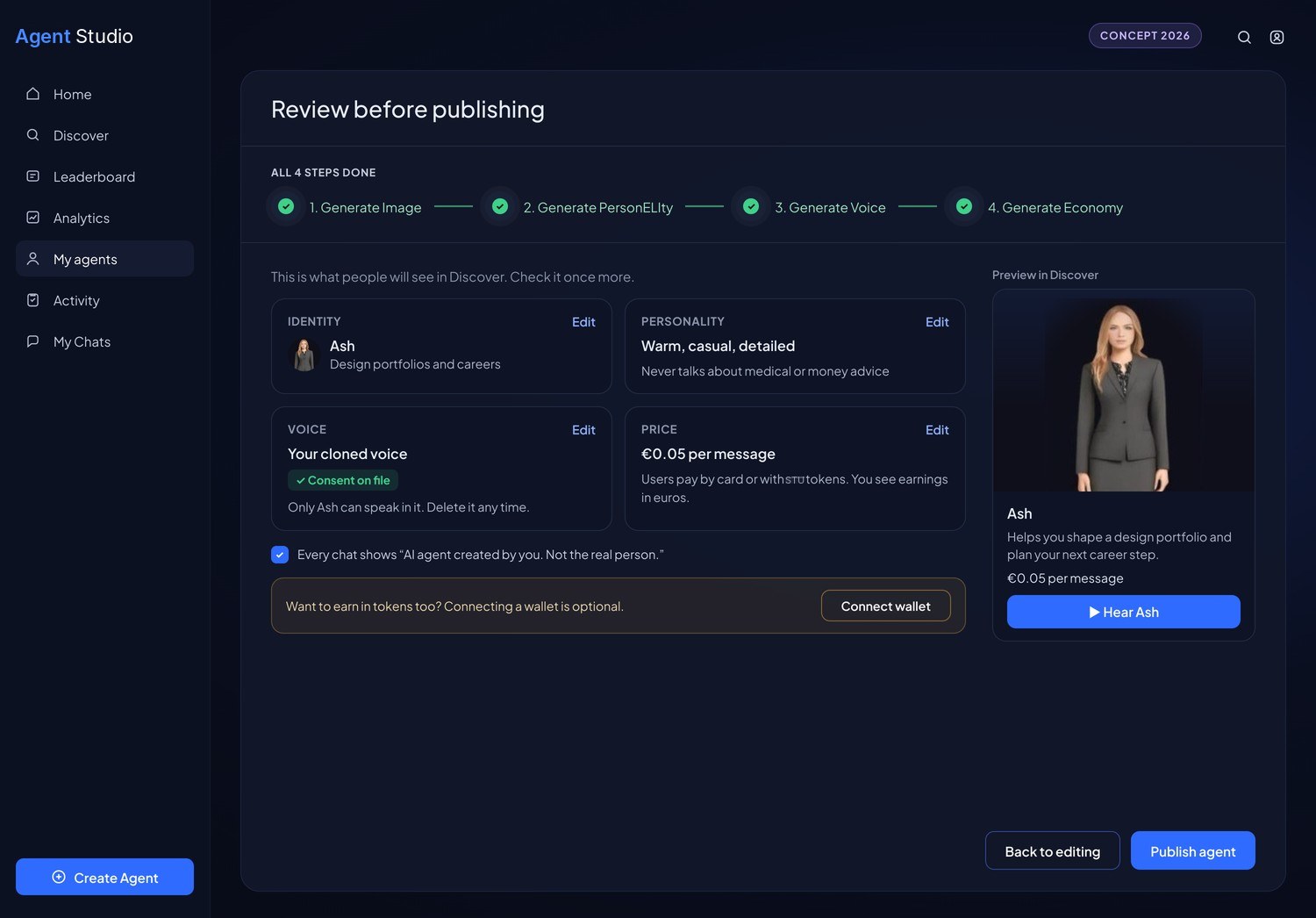
Concept 2026 · Review
Concept: review before publishing, summarising identity, personality, voice consent and a price in euros, with an AI disclosure, an optional wallet and a preview of the Discover card.
Review before publishing. Answers four walkthrough issues at once: a check of what goes public, voice consent on file, a price in euros that card users understand, and the wallet offered only here, as an option. Concept, not shipped.
Before we clone your voice

You decide where your voice goes

Your agent can speak in chat
Others can use it in their content
Use it to improve Agent Studio's models
Delete your voice anytime in Settings. It's removed from your agent within 24 hours.
Agree and record

Consent before cloning

A single screen in plain language, off by default for anything beyond your own agent. Answers “control and consent are everything.”

Step 3 of 4 · Voice

Read this aloud

“Hi, I'm Ash. Ask me anything about design, I'll answer the way I would over coffee.”
Recording qualityClear
Hear your agent say hello

A real script and instant preview

Replaces the placeholder script with one written in the agent's voice, adds a quality meter, and plays the cloned greeting straight away.

Chat with Ash
AI agent created by Ash. Not the real person.
Hey! Want feedback on your portfolio?
Yes please, the case study pages.
Start with the problem, not the screens. I'll show you how.
Voice protected · consent on file

Always tell users it's an AI

A persistent disclosure in every chat, and a badge that shows the creator agreed to how their voice is used.

13 · Reflection

Order beats reduction, and trust is a design problem.

What I learned

  • Owning one side of a two-sided product means designing for the handoffs, not only for my screens.
  • When people commit matters more than how many steps there are. Put the moment that makes it feel real early.
  • With an AI that represents a person, consent and control belong in the flow, not in the terms of service.

Next: a real 5 person test

  • Recruit 5 people who have never used a crypto wallet, the group the survey says is the majority.
  • Task 1: create an agent and give it a voice. Measure completion without help and time to first hearing the voice.
  • Task 2: after cloning, explain in your own words who can use your voice. Measure whether the answer is right.
  • Task 3: find where to delete your voice. Measure success and clicks.

What I learned

  • Put the rules in the interface. Credit thresholds, wallet states and pod states only felt fair once users could see them before acting.
  • Abstract things need a visible shape. A waveform, a timer or a progress bar did more for trust than any explanation.
  • Copy is part of the design. The download toast took several drafts, and the final wording did more than a new screen would have.

What I would measure next

  • Recite completion rate and how often users re record
  • Share of Broadcast attempts blocked by credits, before and after the threshold design
  • Onboarding tour completion and drop off by step
  • Time from first visit to first staked pod